
02 Feb 2024
Get in touch with us today by phone or email for a no obligation chat about how we can help.
Within this guide, we will look at:
The hidden expense of employee absence is substantial. In 2020, UK businesses incurred approximately £7bn in absence-related costs – a staggering figure, isn’t it?
While occasional sick days are inevitable, it’s crucial to monitor the potential impact on your business. Calculating the cost involves considering the ripple effect.
Beyond the continued salary payout, absenteeism creates resource challenges, burdening colleagues with additional work. This can result in reduced productivity, missed deadlines, and potential disruptions to client relationships.
The most convenient method for monitoring absenteeism is by utilising HR software, such as Breathe. This software enables automatic recording, monitoring, and reporting of absence trends. It provides comprehensive insights, allowing you to gauge the extent of absenteeism’s impact on your business.
Return-to-work interviews
Conducting return-to-work interviews is a straightforward approach to understand the reasons behind employee absences. In certain instances, these interviews can act as a deterrent for taking unwarranted sick leave.
We can assist you by providing various templates and frameworks to facilitate your return-to-work interviews.
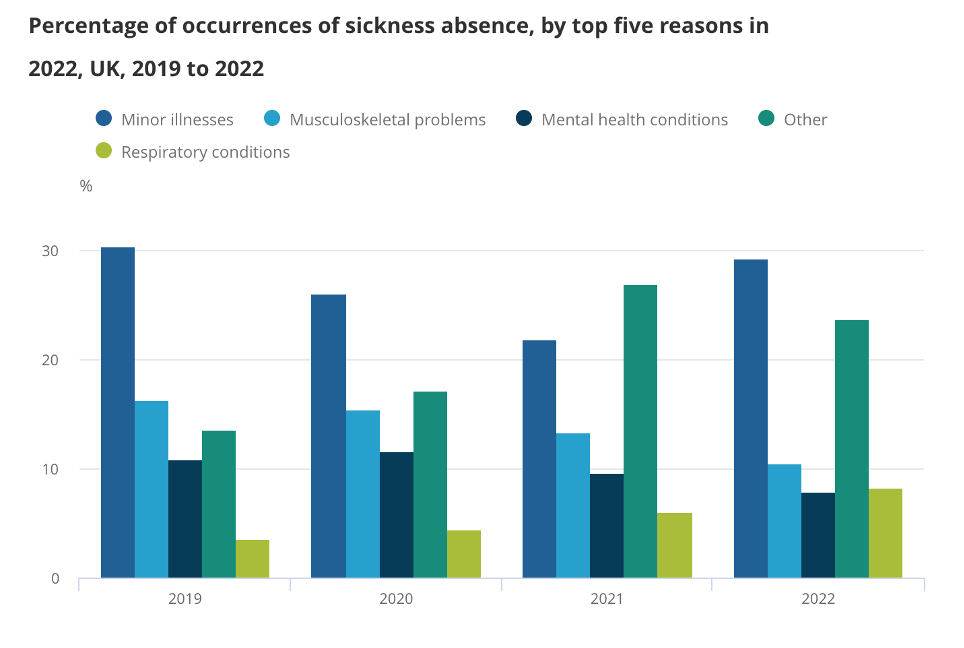
Taken from the Office of National Statistics
Tailoring your approach to reduce absenteeism hinges on understanding the root causes behind employee time off. You may need to investigate these areas further by conducting employee surveys to fully understand what needs to be fixed.
Some key areas to address include:
✅ Foster a culture of wellbeing: Prioritise both the physical and mental health of your team, cultivating a positive work environment.
✅ Embrace flexible working arrangements: Accommodate diverse needs for a healthier work/life balance.
✅ Invest in training and development: Provide opportunities for growth to instill purpose and alleviate monotony.
✅ Establish clear communication channels: Foster open dialogue to address concerns promptly and build trust within your team.
✅ Recognise and reward efforts: Boost morale and commitment by acknowledging the contributions of your team.
✅ Encourage open discussions on mental health: Break down stigma through honest conversations.
✅ Provide mental health resources: Equip your team with tools to manage their mental health effectively.
✅ Advocate regular breaks: Promote a culture of taking breaks and mindfulness for mental recharge.
✅ Set expectations for work/life balance: Clearly communicate working hour expectations for a healthy balance.
✅ Train managers in mental health awareness: Empower managers to recognize and support team members facing stress.
✅ Identify and address stressors: Pinpoint sources of stress in the workplace and implement targeted solutions.
✅ Utilise the Bradford Score for stress management: Identify patterns in short-term absences as potential indicators of stress-related issues.
✅ Implement stress-reducing initiatives: Introduce proactive measures like wellness programs and stress management workshops.
If you would like to improve absence in your business, get in touch with us today.

Get in touch with us today by phone or email for a no obligation chat about how we can help.


© HR Solve It 2021-2026 - All Rights Reserved
| Company Number: 13590911 Registered In England & Wales | Website by  | Privacy Notice & Cookie Policy
| Update cookies preferences
| Privacy Notice & Cookie Policy
| Update cookies preferences